The Manaslu Circuit Trek provides a thrilling trek experience through the wild and remote areas of the Manaslu region. This 14-day trek takes you on a mesmerizing circuit around Mt. Manaslu (8163 m), one of the highest mountains in the world, offering beautiful views of snow-capped peaks, lush valleys, and traditional Tibetan villages along the way.
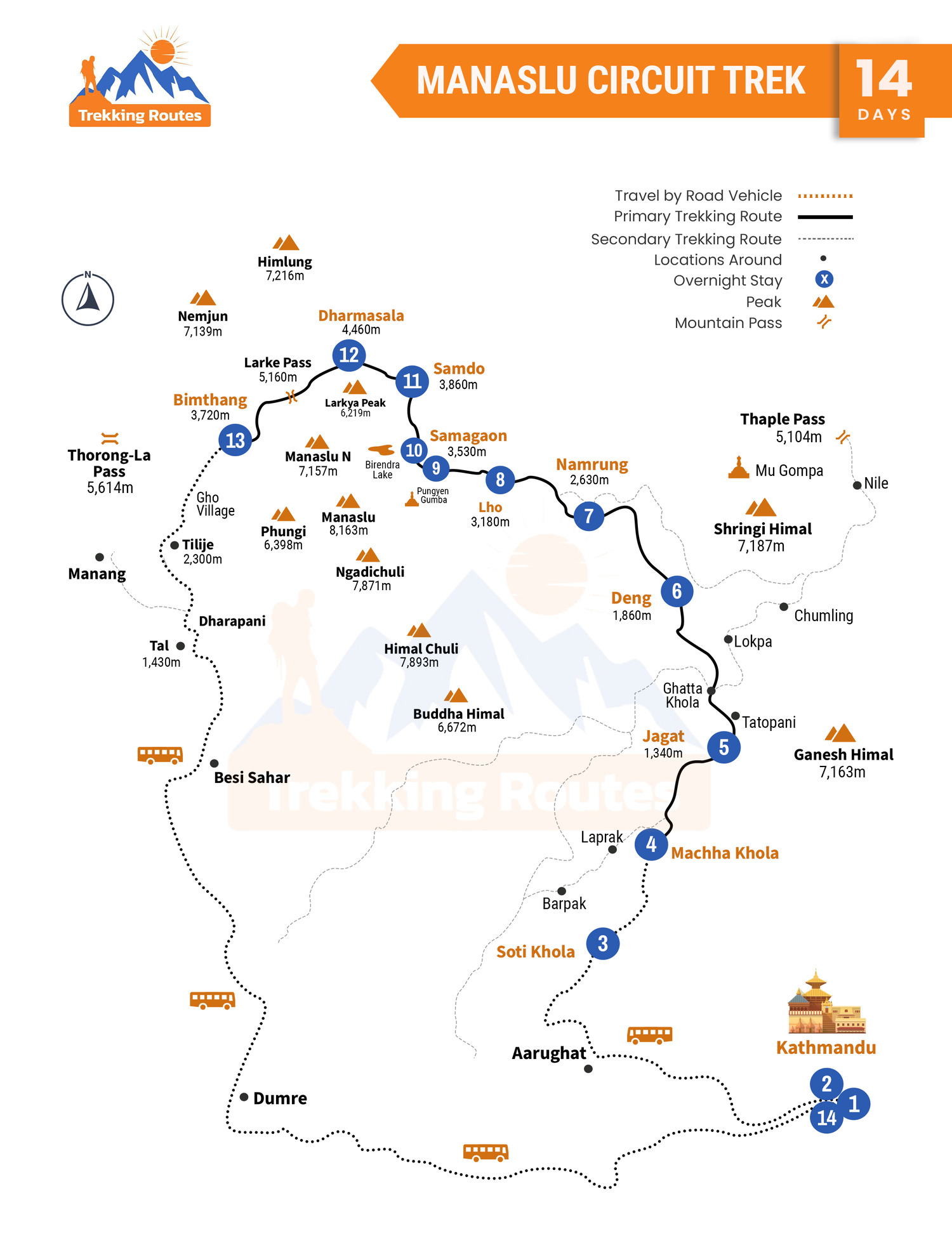
We start our trip in Kathmandu. From there, we take a bus through beautiful scenery to Arughat Bazaar, which is the entrance to the Manaslu region. From Arughat, we make our way to Machha Khola, our first overnight stop, immersing ourselves in the serene beauty of the surrounding landscapes.
As we traverse through the diverse terrain, we encounter a myriad of landscapes, from dense forests teeming with rhododendron and bamboo to barren, rocky terrain adorned with prayer flags fluttering in the wind. Every day brings with it a fresh set of obstacles and opportunities for us to overcome as we move through remote villages, cross suspension bridges over roaring rivers, and ascend to higher altitudes.
The trek offers ample opportunities for cultural immersion. We pass through traditional Gurung and Tibetan villages, where locals warmly welcome us into their homes and share their rich cultural heritage. Along the way, we have the chance to interact with villagers, learn about their way of life, and witness ancient monasteries and chortens nestled amidst the mountains.
One of the highlights of the trek is the rest day in Sama Gaon, where we have the opportunity to explore the surrounding area, including the majestic Manaslu Base Camp, Birendra Lake, and Pungent Gompa. Acclimatization and rejuvenation are allowed by this rest day, ensuring that preparedness for the challenges ahead is achieved.
As we make our way over the daunting Larke La Pass (5160m) on Day 11, we reach the pinnacle of the journey. This pass provides us with breathtaking views of the peaks of the Himalayas that are located in the surrounding area, including Manaslu, Himlung Himal, Cheo Himal, and Annapurna II Mountain. We get a look at the traditional way of life in the mountains as we make our journey down from the pass, which takes us through pristine alpine meadows and picturesque villages.
In Dharapani, where our journey comes to an end, we say our goodbyes to the mountains and set off on a magnificent drive back to Kathmandu via Besisahar. around the way, we reflect on the life-changing experiences and memories that we accumulated throughout our trek around the Manaslu Circuit.
Best Season for Manaslu Circuit trek
The Manaslu Circuit Trek offers a spectacular adventure through the rugged landscapes of the Manaslu region, but choosing the right time to embark on this journey is crucial for a safe and enjoyable experience. The best time for the Manaslu Circuit Trek is during the spring and autumn seasons, which offer favorable weather conditions and stunning views of the Himalayas.
Spring, which falls between March and May, is considered one of the best times to undertake the Manaslu Circuit Trek. During this season, the weather is generally stable, with clear skies and mild temperatures, making it ideal for trekking. The trails come alive with vibrant colors as rhododendron forests burst into bloom, creating a breathtaking backdrop against the snow-capped peaks of the Himalayas.
Autumn, from September to November, is another popular time for the Manaslu Circuit Trek. During this season, the weather is cool and dry, with clear visibility, making it perfect for trekking. The skies are typically clear, offering stunning views of the surrounding mountains, including Mt. Manaslu, the eighth-highest peak in the world. A more peaceful and immersive trekking experience is allowed by the less crowded trails compared to the peak tourist season.
Spring and autumn are generally considered to be the best times for the Manaslu Circuit Trek, but the weather conditions and seasonal variations must be taken into account. The Manaslu region experiences monsoon rains during the summer months from June to August, which can result in landslides, muddy trails, and poor visibility, making trekking hazardous. Therefore, it’s advisable to avoid trekking during the monsoon season to ensure safety and minimize risks.
Similarly, the winter months from December to February bring cold temperatures and heavy snowfall to the Manaslu region, particularly at higher elevations. Trekking during this time can be challenging, as trails may be snow-covered and icy, making it difficult to navigate. However, for those seeking a more adventurous experience, winter trekking in the Manaslu region can offer solitude and unique landscapes blanketed in snow.
Ultimately, the best time for the Manaslu Circuit Trek depends on individual preferences, fitness levels, and tolerance for weather conditions. Spring and autumn remain the most popular seasons for trekking due to favorable weather and stunning scenery, but with proper preparation and caution. Unforgettable experiences amidst the breathtaking beauty of the Himalayas can be offered year-round as the Manaslu region is explored.
The uniqueness of the Manaslu Circuit trek
Several unique features are distinguished in the Manaslu Circuit Trek, causing it to be considered a standout choice by adventurous trekkers seeking an off-the-beaten-path experience in the Himalayas.
One key aspect is its status as a restricted area trek, requiring special permits and limiting visitor numbers. This exclusivity preserves the region’s natural beauty and cultural heritage, allowing trekkers to explore remote villages and immerse themselves in authentic Himalayan culture.
Additionally, the trek offers breathtaking landscapes and diverse ecosystems, ranging from lush green valleys to rugged mountain passes. Trekkers are presented with unparalleled views of Mt. Manaslu and other majestic peaks, and unforgettable moments are created at every turn.
Another highlight is the challenging Larkya La Pass, situated at an altitude of 5,160 meters. Crossing this high mountain pass is a test of endurance, but the panoramic views from the top are truly spectacular, offering a sense of accomplishment and awe-inspiring beauty.
Furthermore, the Manaslu region is rich in cultural heritage, with a mix of ethnic communities and traditional villages along the trail. Trekkers have the chance to visit ancient monasteries and Buddhist shrines, gaining insight into the local way of life and spiritual beliefs.
In summary, the Manaslu Circuit Trek offers a unique blend of natural beauty, cultural immersion, and adventure, making it an unforgettable journey for those seeking an authentic Himalayan experience.
Advantages of booking with a licensed agency
Booking your trek with a licensed travel agency offers several advantages, ensuring a safe, enjoyable, and well-organized experience. Trekking Routes, as a reputable travel company, provides expertise and support throughout your journey, enhancing your trekking adventure in Nepal.
Firstly, licensed travel agencies like Trekking Routes have a team of experienced and knowledgeable guides who are familiar with the trekking routes, local customs, and safety protocols. They provide valuable insights, ensuring you make the most of your trek while staying safe in the mountains.
Moreover, licensed agencies handle all necessary permits and paperwork, saving you time and hassle. Trekking Routes takes care of obtaining permits for restricted areas like Manaslu and Tsum Valley, ensuring compliance with local regulations, and preserving the environment.
Additionally, booking with a licensed agency offers financial protection and peace of mind. Trekking Routes operates with transparency and integrity, providing clear pricing and terms. You can trust that your investment is secure, with no hidden costs or surprises.
Furthermore, licensed agencies prioritize safety and responsible tourism practices. Trekking Routes prioritizes the well-being of its clients and staff, adhering to industry standards for safety equipment, emergency preparedness, and environmental sustainability.
By booking with a licensed travel agency like Trekking Routes, you gain access to professional services, local expertise, and a commitment to excellence. Whether you’re embarking on a challenging trek or a cultural tour, you can rely on Trekking Routes to provide a memorable and rewarding experience in Nepal.
Manaslu Circuit Trek Highlights
- Scenic Bus Journey: Enjoy a picturesque bus ride from Kathmandu to Arughat Bazaar, passing through charming villages and lush landscapes, providing a glimpse into rural Nepalese life.
- Riverside Trekking: Begin your trek from Machha Khola, following the meandering Budhi Gandaki River, with stunning views of cascading waterfalls and terraced fields along the trail.
- Cultural Encounters: Explore traditional villages like Jagat and Philim, where you’ll encounter the unique culture and hospitality of the local Gurung and Tibetan communities, immersing yourself in their customs and traditions.
- Himalayan Views: Marvel at breathtaking Himalayan vistas as you ascend through diverse terrain, from lush forests to rugged mountain passes, with iconic peaks like Manaslu and Ganesh Himal dominating the skyline.
- Remote Villages: Trek off the beaten path to remote villages like Deng and Ghap, nestled amidst towering peaks, offering a glimpse into the serene and untouched way of life in the Himalayan highlands.
- Tibetan Monasteries: Visit ancient monasteries like Rachen Gompa and Mu Gumpa, perched on hilltops and adorned with colorful prayer flags, providing a spiritual retreat and panoramic views of the surrounding mountains.
- Alpine Meadows: Traverse through picturesque alpine meadows as you trek from Lho to Sama Gaon, surrounded by towering peaks and grazing yaks, offering a serene atmosphere amidst nature.
- Rest Day Exploration: Take a well-deserved rest day in Sama Gaon and explore nearby attractions like Manaslu Base Camp and Birendra Lake, immersing yourself in the beauty and serenity of the Himalayan landscape.
- High Mountain Pass: Challenge yourself with a trek to Dharamsala, crossing the formidable Larke La Pass at 5160 meters, offering panoramic views of the snow-capped peaks and rugged terrain.
- Cultural Diversity: Experience the rich cultural diversity of the region as you encounter diverse ethnic groups, including the indigenous Gurung, Tibetan, and Tamang communities, each with their own distinct traditions and customs.
- Scenic Drive Back: Conclude your trek with a scenic drive from Dharapani back to Kathmandu via Besisahar. Retrace your journey through picturesque landscapes and reminisce about the unforgettable experiences of your Manaslu Circuit Trek.